Triceratops
herbivoreLate Cretaceous (68-66 Ma)
PALAEONTOLOGICAL RECORD
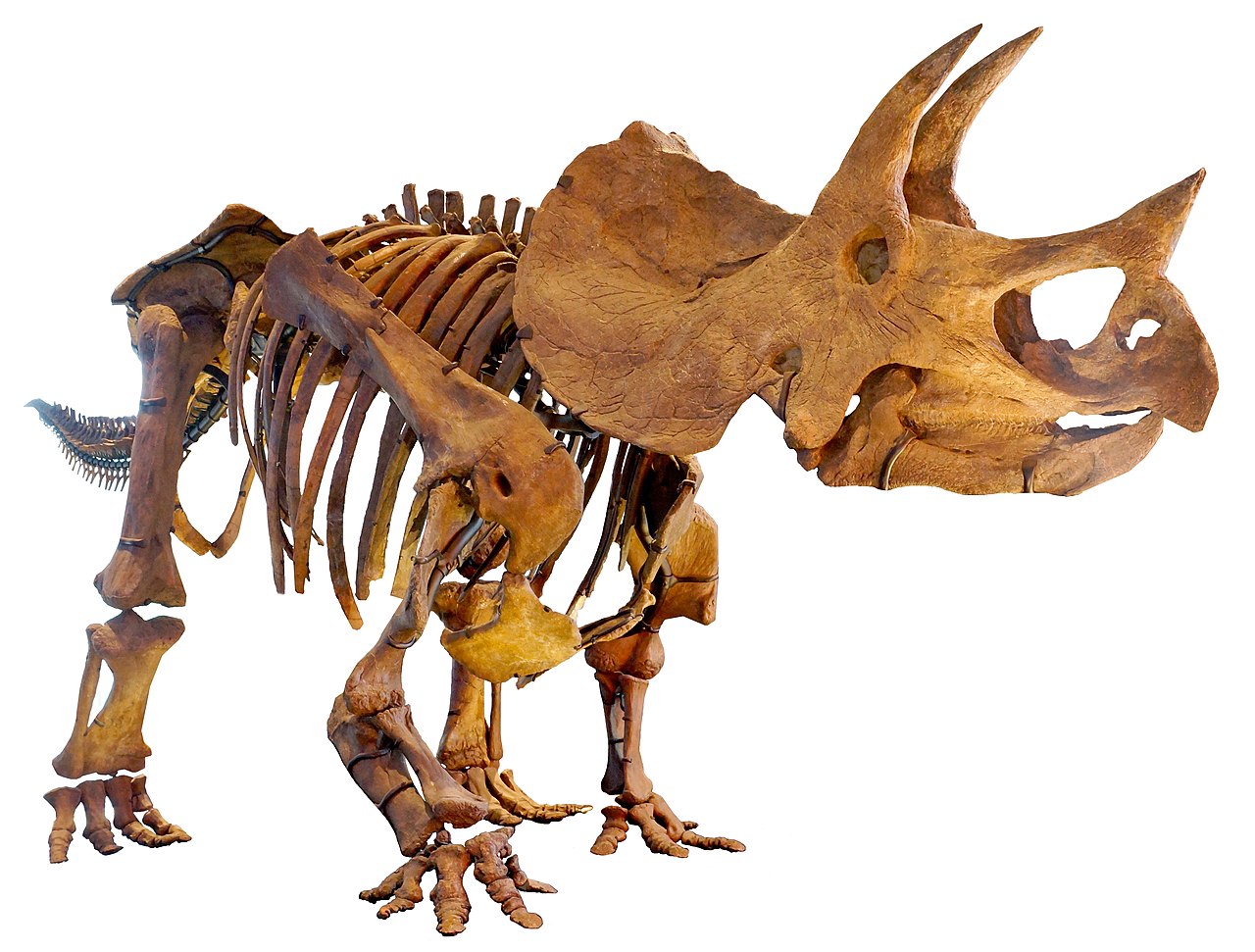
Triceratops is a genus of chasmosaurine ceratopsian dinosaur that lived during the late Maastrichtian age of the Late Cretaceous period, about 68 to 66 million years ago on the island continent of Laramidia, now forming western North America. It was one of the last-known non-avian dinosaurs and lived until the Cretaceous–Paleogene extinction event 66 million years ago. The name Triceratops, which means 'three-horned face', is derived from the Ancient Greek words τρί-, meaning "three", κέρας, meaning "horn", and ὤψ, meaning "face".
DISCOVERY
First described by O.C. Marsh in 1889.
DIETARY PROFILE
Powerful bite capable of shearing thick cycads and palm fronds.
NOTABLE PALAEONTOLOGY FACTS
- A third of its entire body length consisted of its massive skull.
- Its neck frill was likely used more for species recognition and sexual display than for physical combat.
HOLLYWOOD INACCURACIES
- Depicted largely accurately in terms of size, shape, and suspected herding behavior.
SCIENTIFIC DEPICTION
PHYSICAL DIMENSIONS
ESTIMATED LENGTH
Fossil Record9 meters
InGen Clone9 meters
ESTIMATED WEIGHT
Fossil Record9,000 kg
InGen Clone10,000 kg
Accuracy Rating
ACCURATE